Academic work
of Info
School
U-M Maizey redesign project
This project focuses on enhancing the usability and adoption of U-M Maizey, the University of Michigan's in-house AI platform. The redesign prioritizes creating a user-friendly interface with improved visual hierarchy, streamlined navigation, and personalized features to better serve the needs of students, faculty, and administrative staff. Through iterative design decisions and user-centered approaches, the project aims to empower users with efficient tools for data analysis, decision-making, and project management.
After identifying key areas for improvement in U-M Maizey, I crafted a redesign that prioritizes usability, accessibility, and personalization. This design brief outlines the goals, constraints, and user-centered strategies that guided the development of a streamlined and visually intuitive interface.
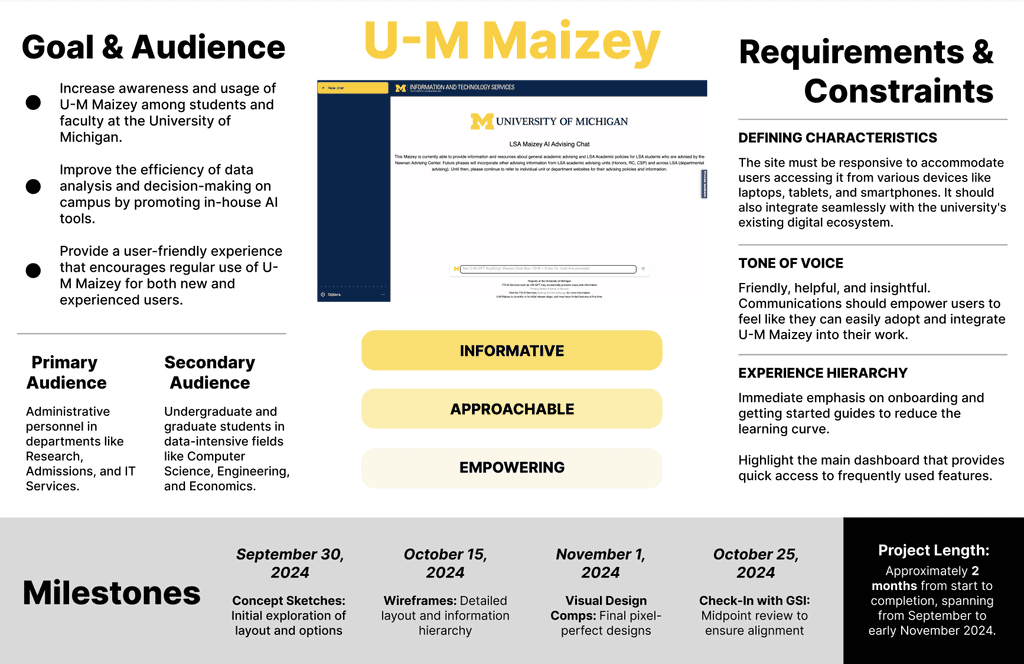
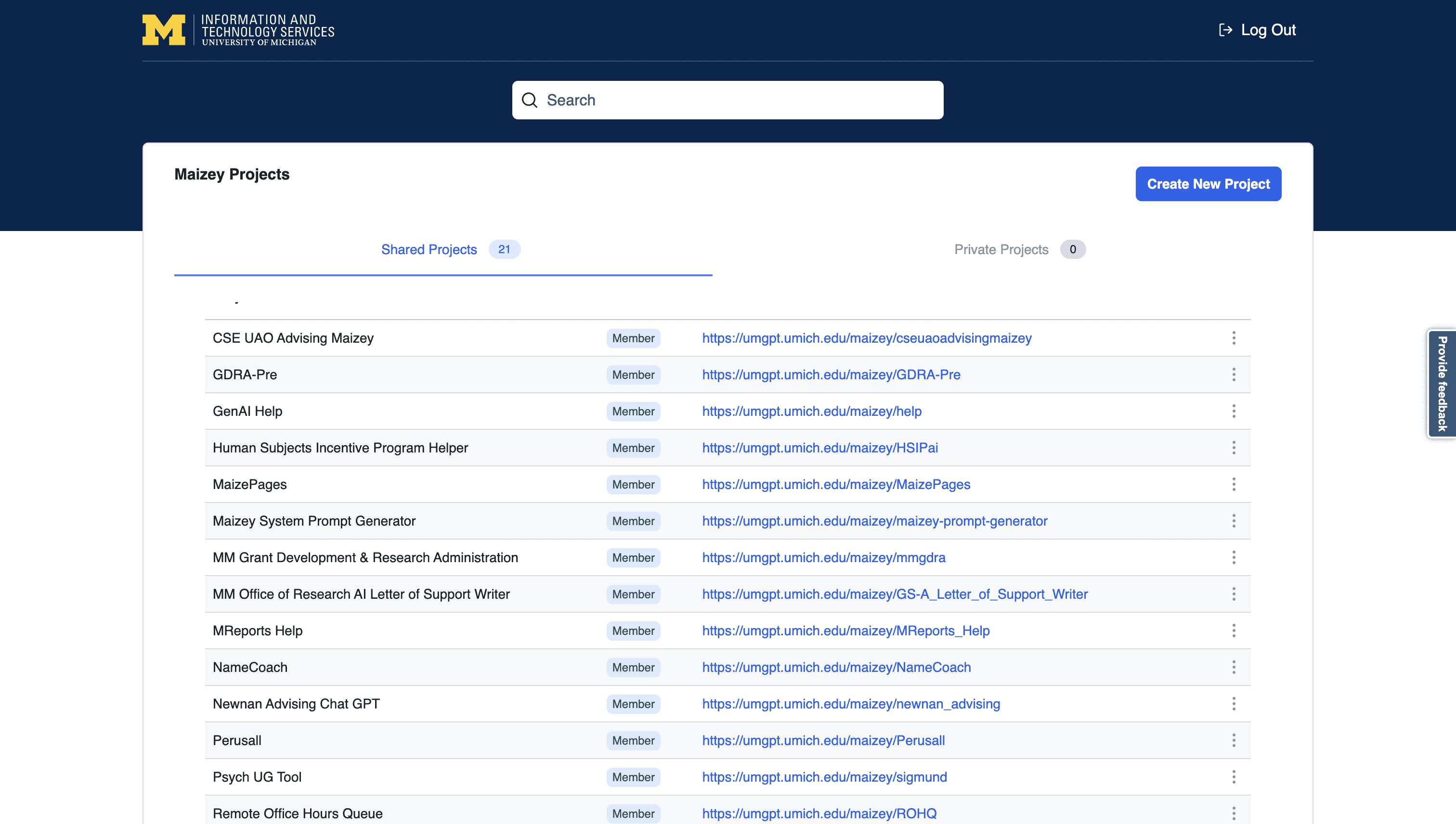
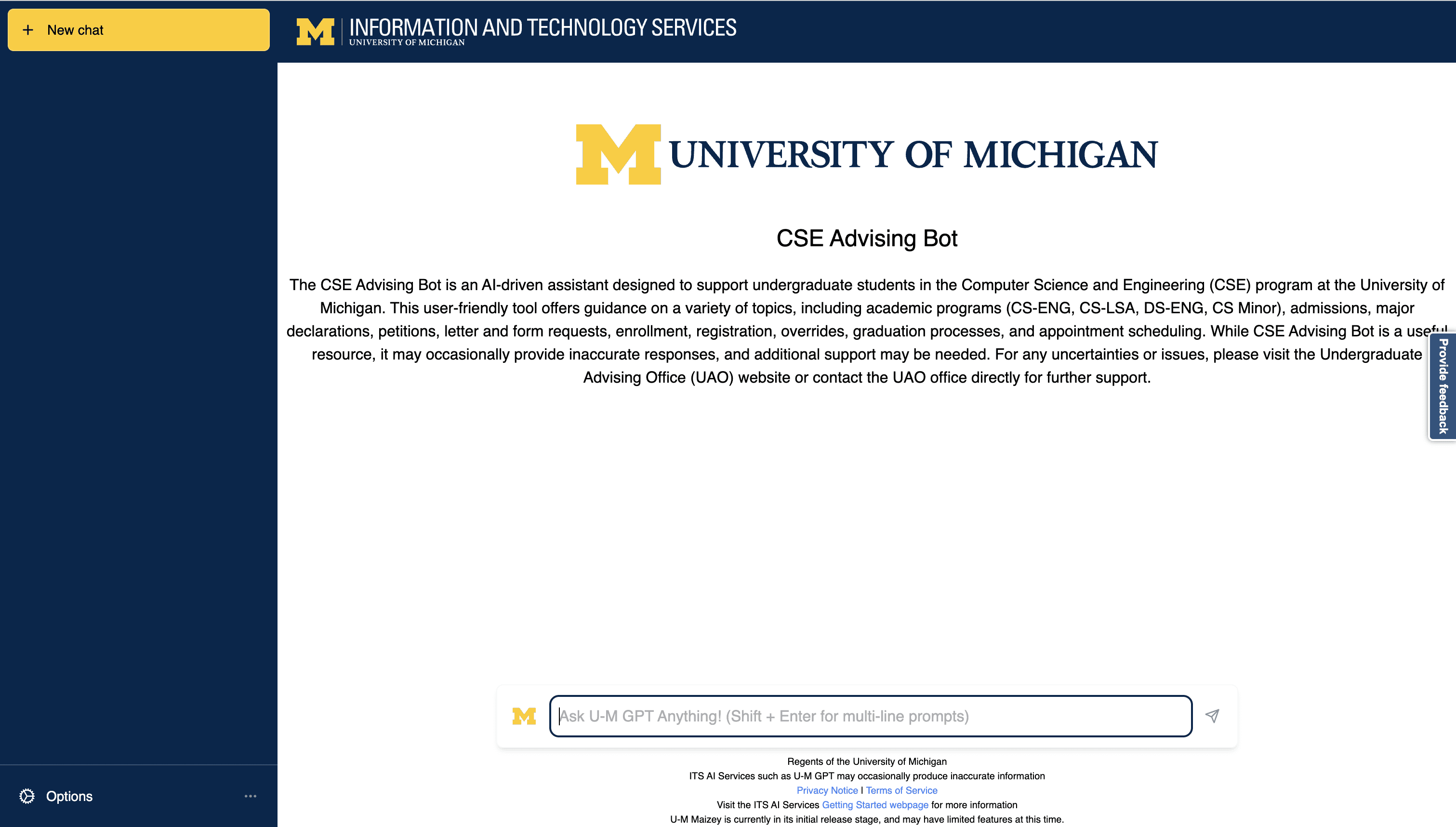
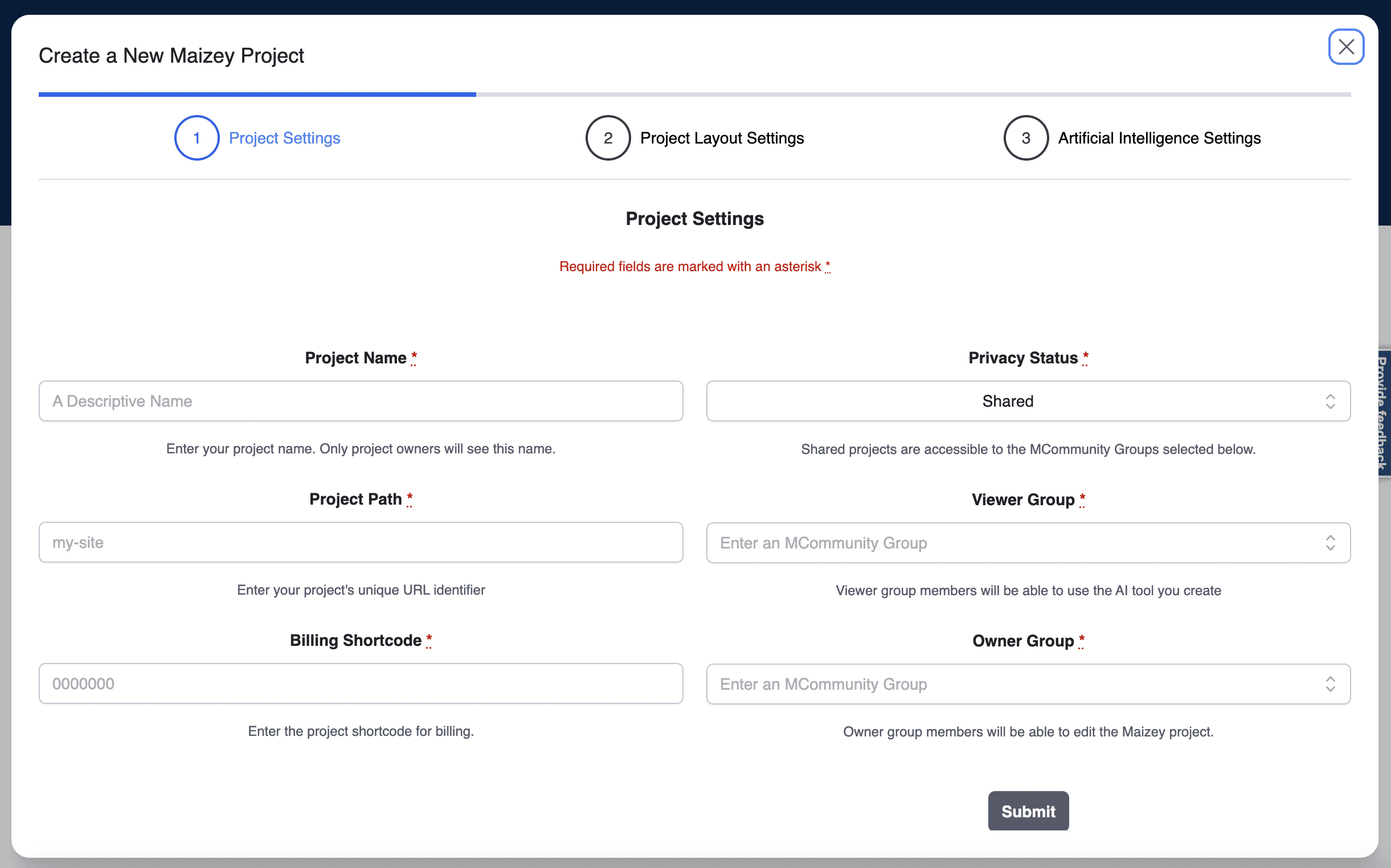
The original U-M Maizey platform presented several usability challenges, including an overwhelming layout, lack of clear visual hierarchy, and insufficient guidance for users to manage projects efficiently. As part of a class project, I conducted a redesign informed by UX principles and techniques learned in class, addressing these key issues to create a more streamlined and user-friendly interface. The redesign demonstrates the application of research-backed solutions to improve navigation, personalization, and overall user experience.
U-M Maizey before
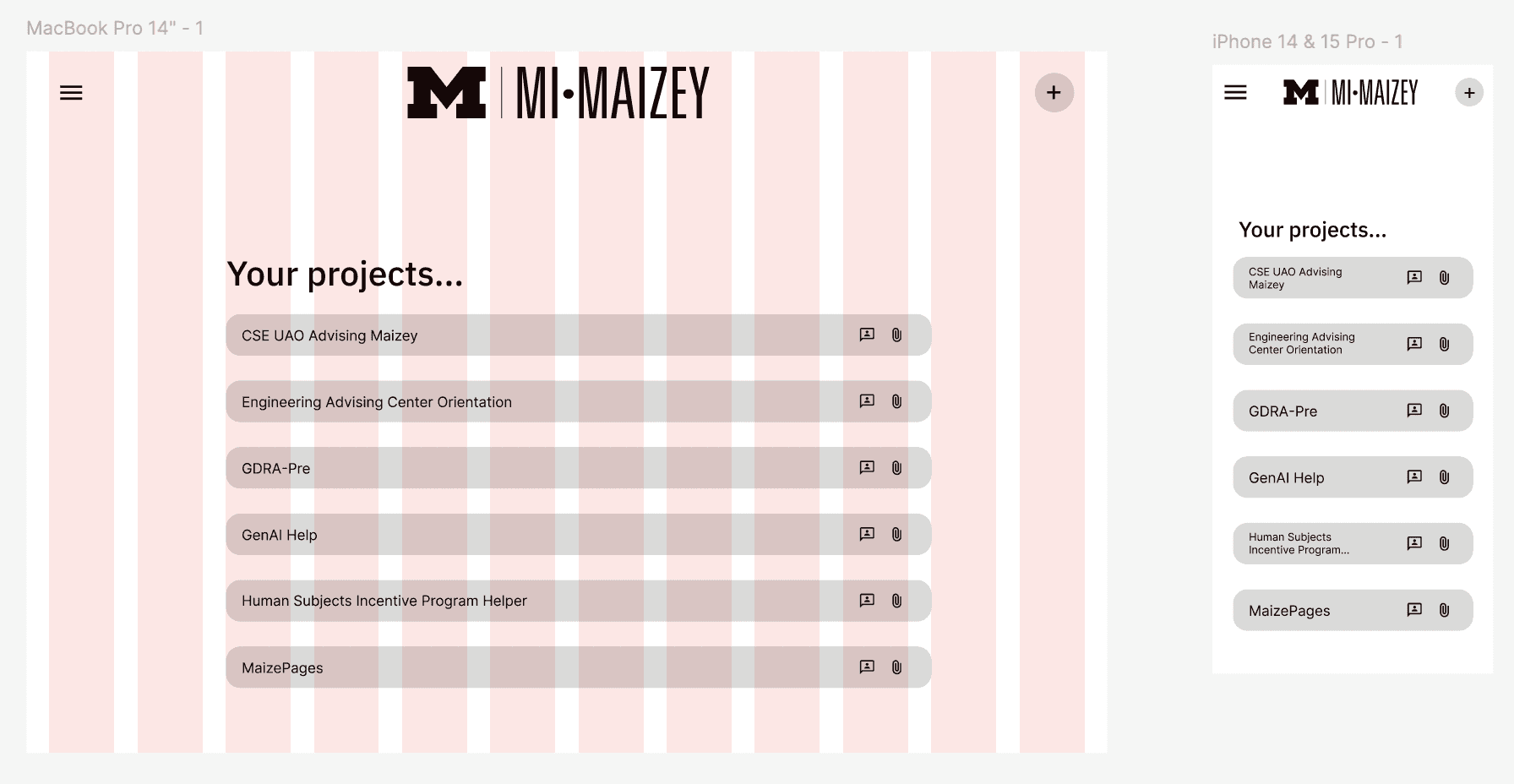

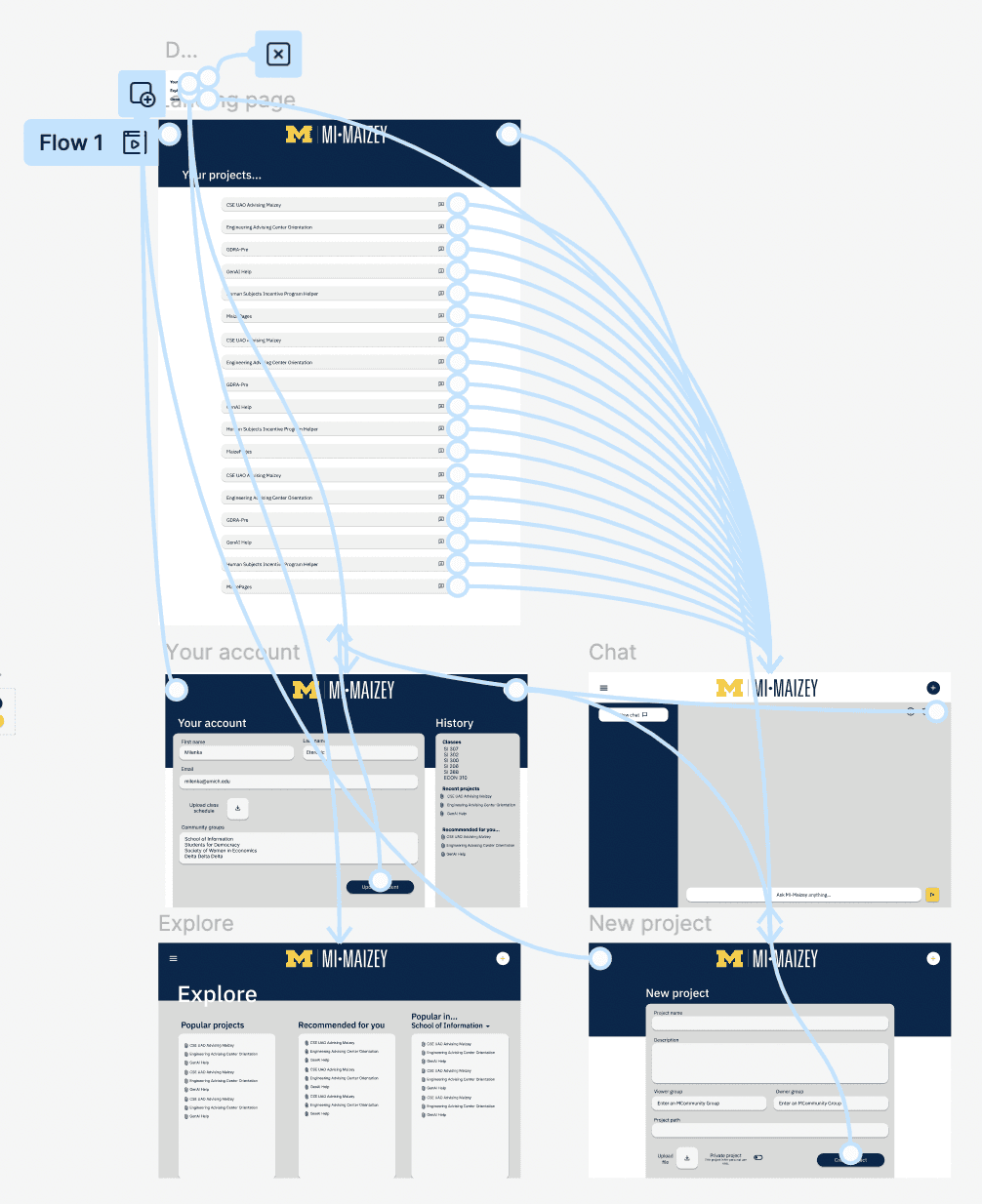
Wireframes
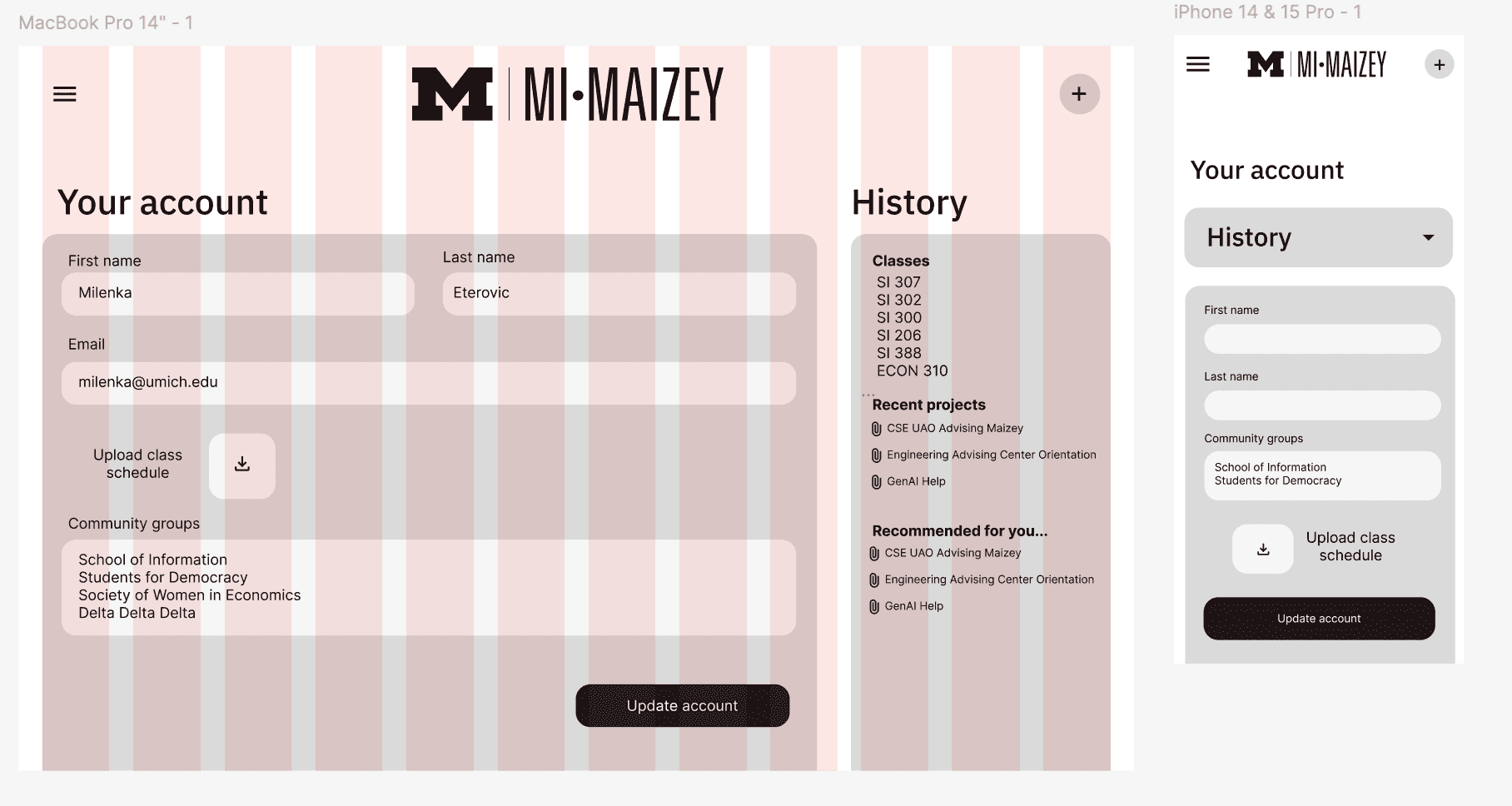
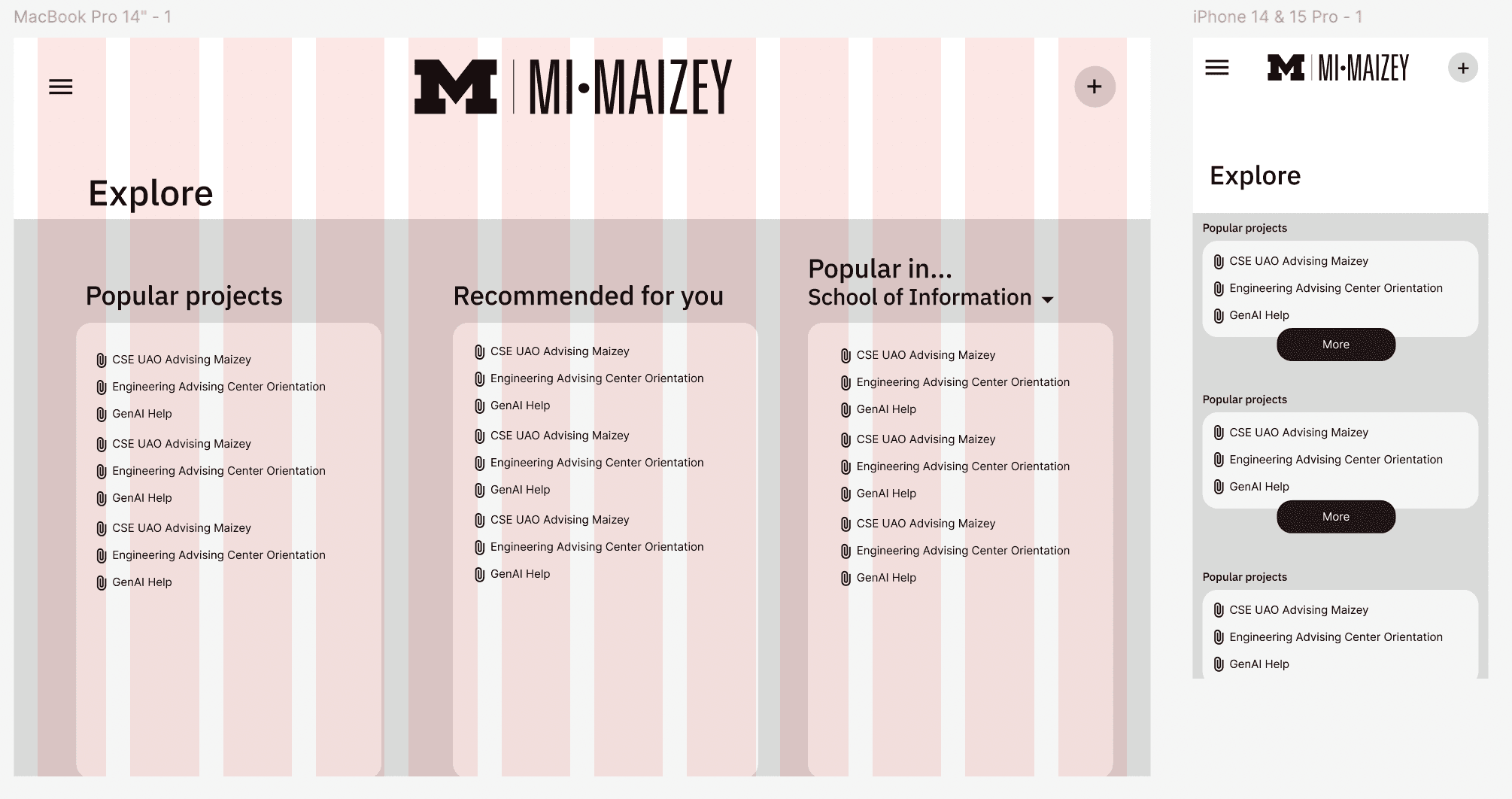
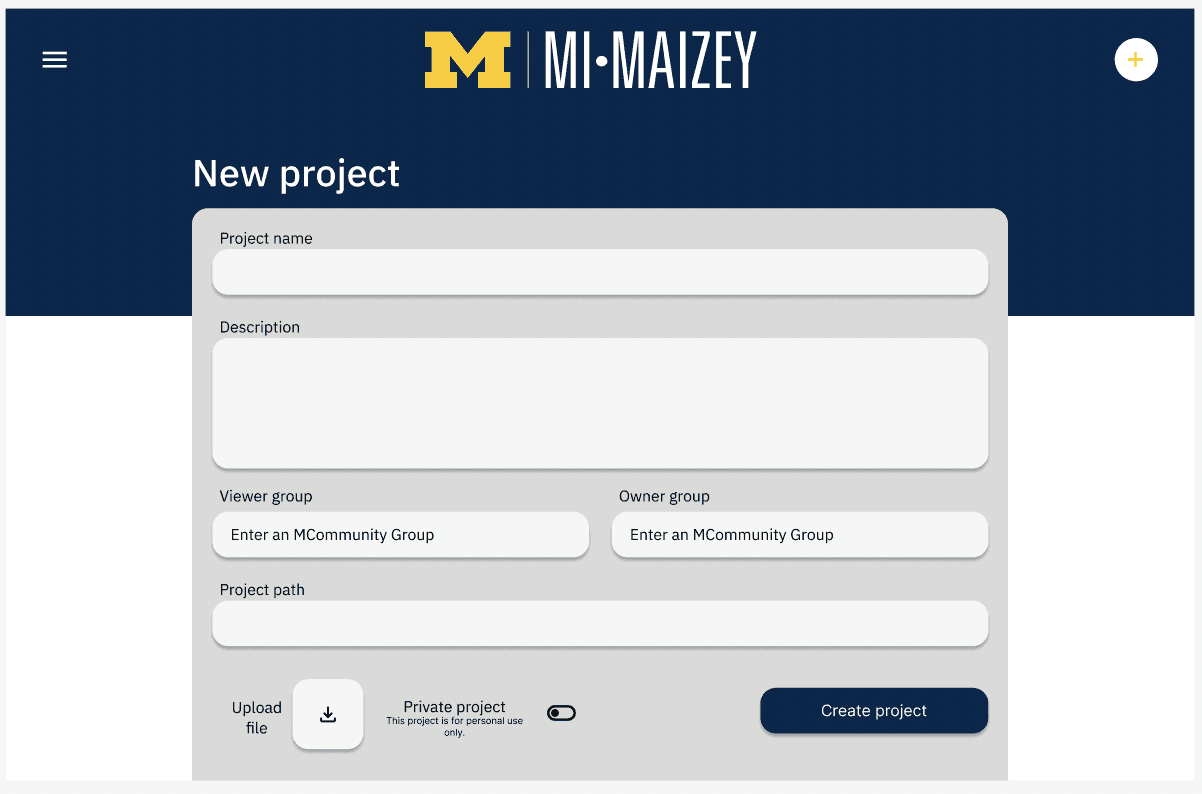
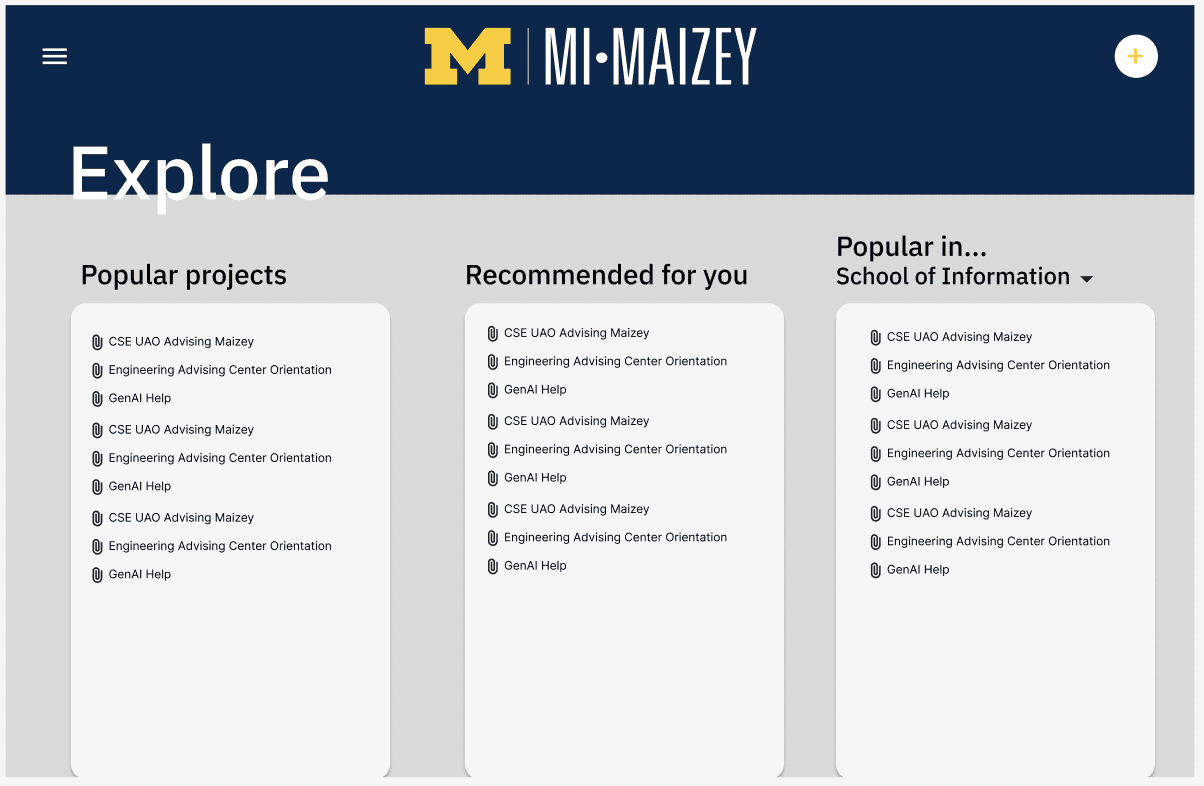
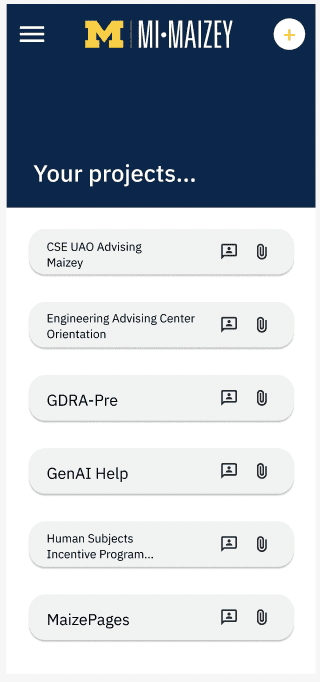
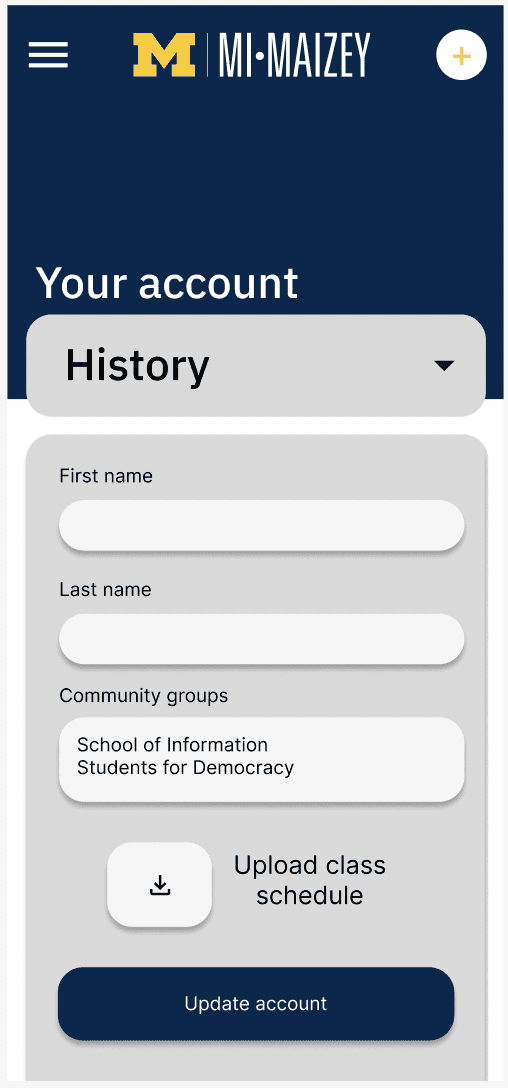
I created wireframes in Figma to reimagine the U-M Maizey platform, starting with an analysis of user needs and the platform’s existing pain points. Using a grid system for consistency, I prioritized simplifying layouts, improving visual hierarchy, and incorporating features such as file upload capabilities and tailored recommendations. Iterative feedback from peers guided refinements, ensuring the designs aligned with both user goals and best practices in UX design.
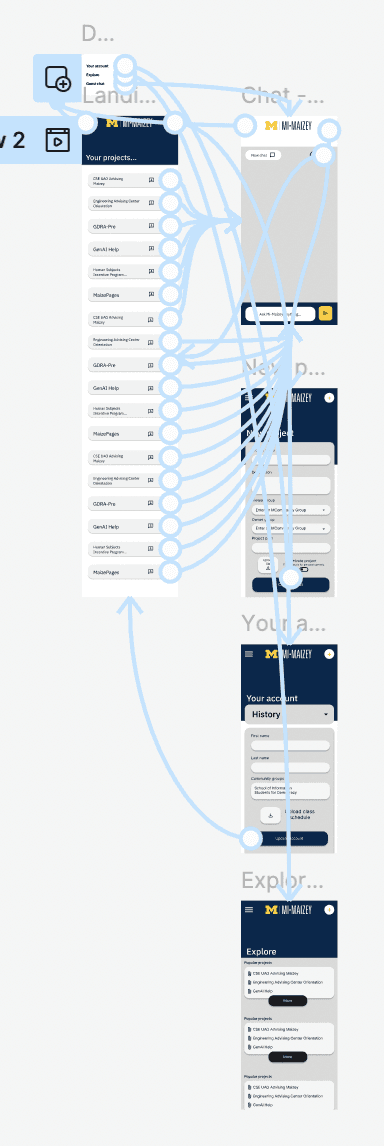
Responsive prototypes
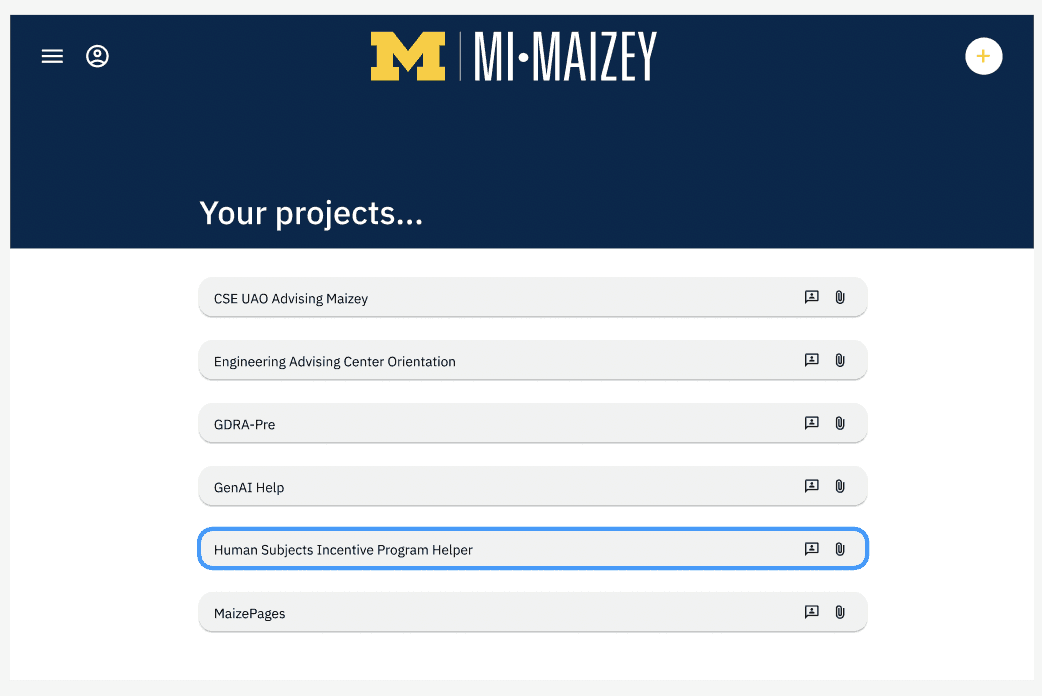
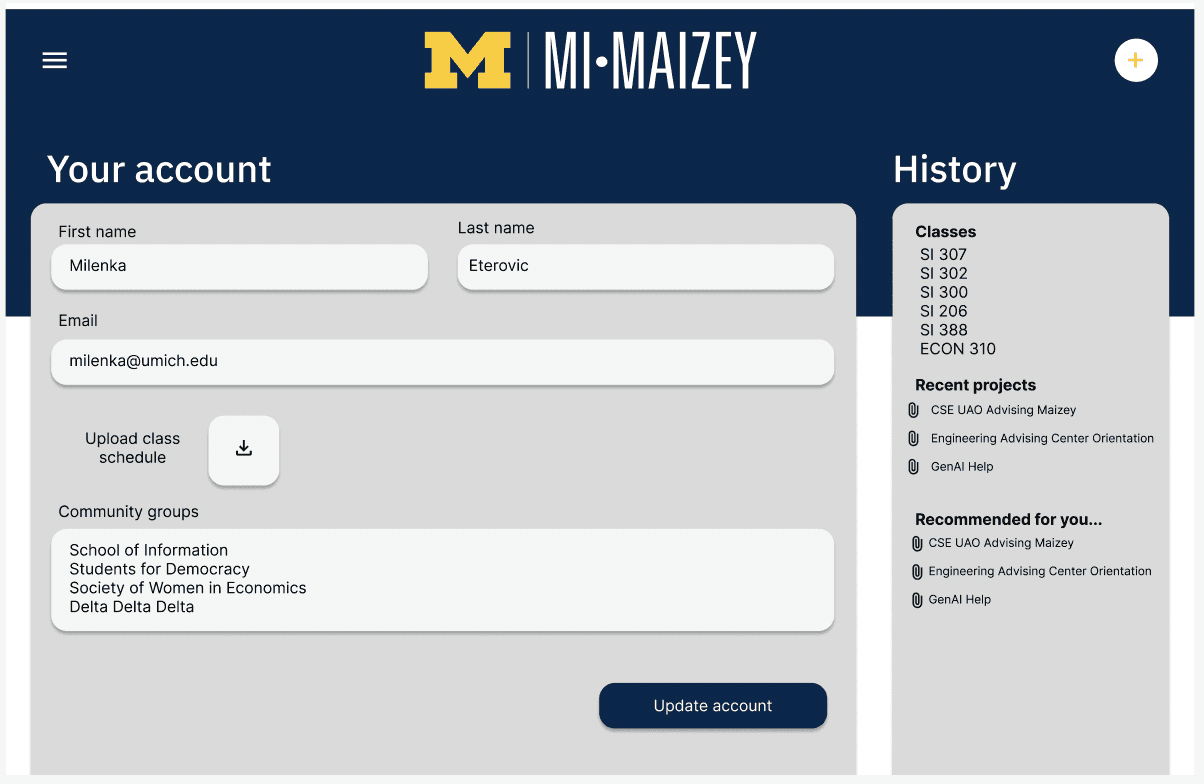
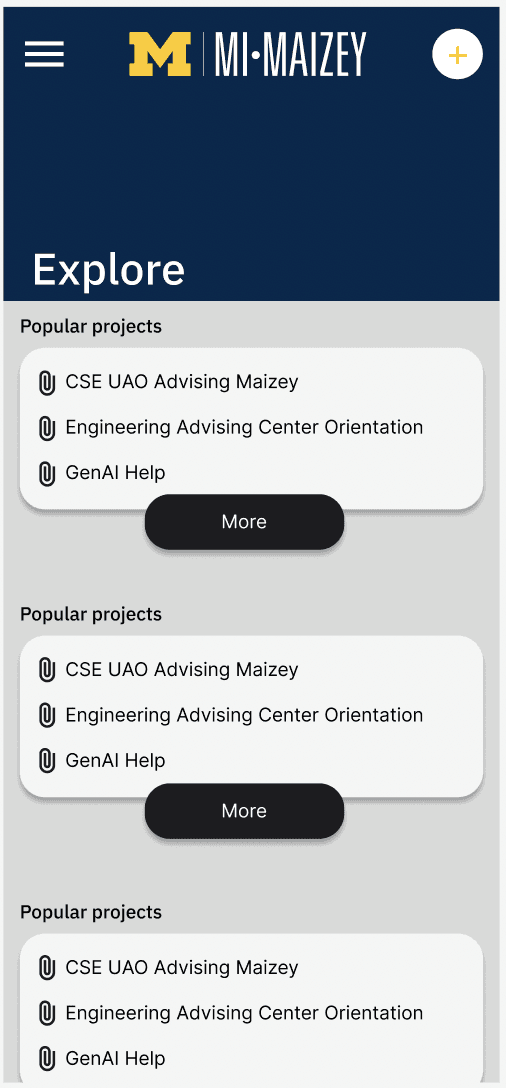
I created responsive prototypes in Figma, keeping in mind the needs of both new and returning visitors. By considering how design choices impact user familiarity and navigation, I ensured the interface provides clear guidance for new users while allowing returning users to easily resume their projects. I incorporated principles like Jakob’s Law and Hick’s Law to streamline the experience and maintain consistency with the University’s style guidelines.

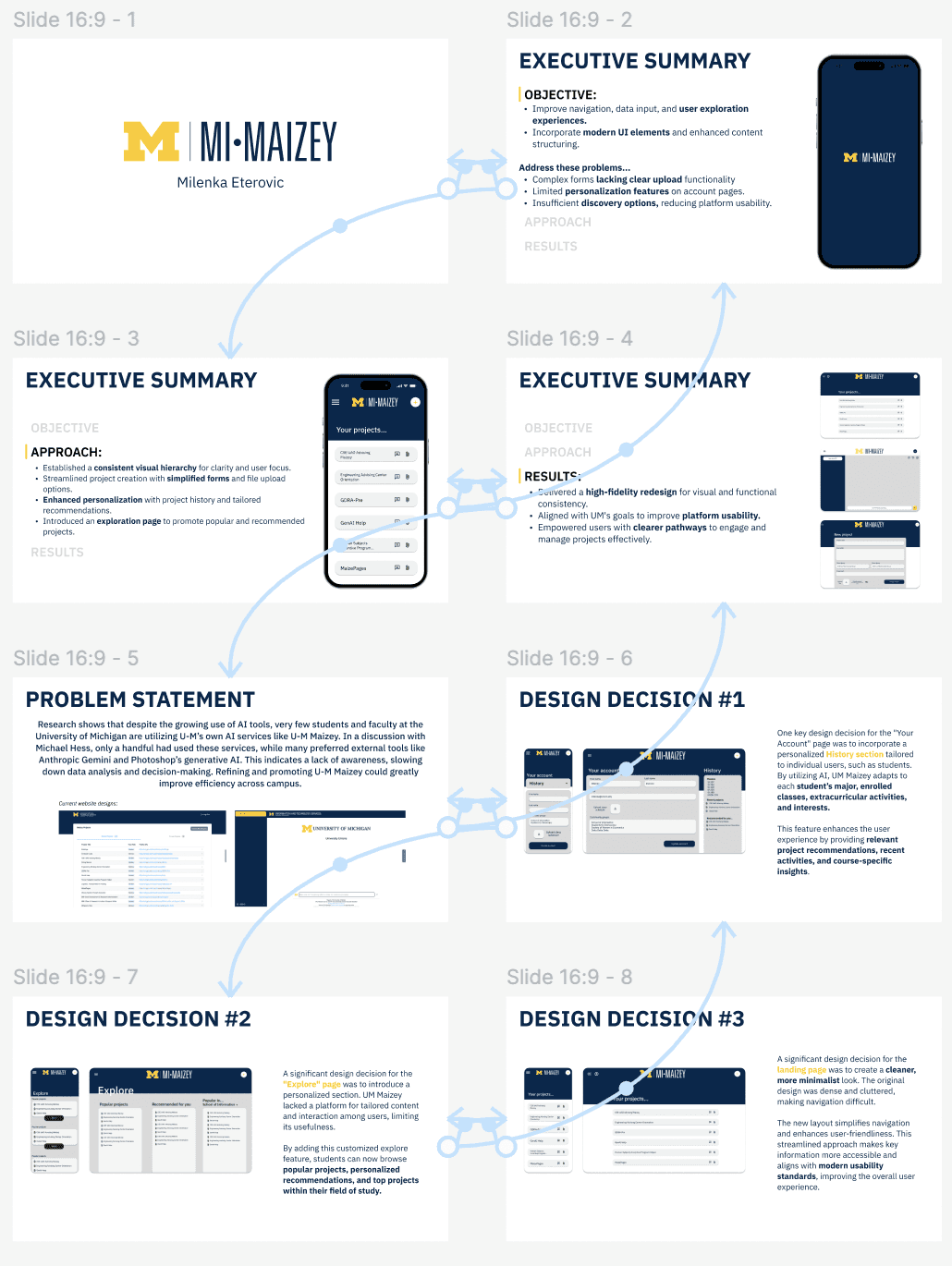
Final presentation
This responsive slide deck presents a comprehensive redesign of MI-Maizey, focusing on improving user navigation, personalization, and engagement. Key features include a high-fidelity interface aligned with the University of Michigan’s visual standards and tailored to address usability challenges. By integrating user-centered design principles, the deck highlights clear design decisions, such as enhancing content discovery, streamlining project management, and promoting AI tools to empower users effectively.